

Primeview USA Inks Partnership with Digital Video Systems
Cruise going passengers will soon have access to Cutting Edge LED Display Technology onboard
Miramar, FL, January 9, 2020 – Through an exclusive partnership agreement with Primeview, Digital Video System’s customers can soon experience this cutting-edge technology first-hand onboard cruise vessels as DVS will sell, install and service all Primeview products for the Cruise ship industry. Primeview’ s line of turn-key LED includes the world’s most flexible, Full HD (1920×1080), 16:9 aspect ratio standard, bezel-free panel display, and eliminates the concerns required with other video wall solutions. Digital Video Systems (DVS) is always looking for new ways to provide innovative technologies for land and sea.
“The vision of Primeview is to provide a consistent quality of experience, leading to higher customer engagement and ROI through increased user adoption of video. Our system integrator partners are an integral component in service delivery”, says Chanan Averbuch, EVP of Primeview. “Digital Video Systems is the perfect partner to introduce our FusionMAX solutions to the Cruise industry”.
In addition to supporting the cruise industry with the best products, services and technical support, Digital Video Systems also provides state-of-the-art Broadcast, Audio Visual, Video Conferencing, Control, Lighting, Head-end, CCTV and Fiber Optic solutions for our customers; all while providing 24/7 technical support. As we continue to expand our products and services, DVS remains committed to delivering the latest technologies to the global markets.
The FusionMAX solutions are available in a striking 110”, 138”, 165” or 220″, it excels as a solution for digital signage, up-close immersive use, and virtually everything in between. And its scalable building block LED means it can be installed in a wider variety of spaces for maximum impact. “This flexibility is key for the Maritime industry”, says Chuck Sackermann, CEO of Digital Video Systems. “We have a variety of clients from yachts to cruise lines to onboard retailers and they are all looking for something unique that delivers the best user experience. Primeview offers the perfect line of products.”
Through the years, Primeview has partnered with broadcast networks such as CBS and ESPN to supply their video walls. As Primeview expands their customer base, the maritime industry is a great fit. Their walls are described as a “step into the future.” In addition to the video walls, Primeview offers touchscreens and their technology solutions can be found in board rooms, museums, retail stores, hotels, casinos and soon cruise ships.
In addition to the FusionMAX offering, Primeview has recently developed a new portable version to simplify the deployment process. As with the UHD and FHD line of FusionMAX, the new FusionMAX2GO products are completely front-serviceable and cable-free as well. The 2GO solution now fits through doorways and elevators and also comes standard with a mechanical lift to adjust the height of the LED wall as well as a road-case for easy logistics.
# # #
About – PRIMEVIEW: Primeview is a privately held global manufacturing company that was launched in 1997 specializing in advanced display solutions, with a focus on the industrial market. Primeview manufactures on the most advanced ISO-certified production lines, maintaining high quality control standards to build products for the most demanding markets. Primeview offers a true “one-stop shop” for display solutions from touchscreens, video walls and specialty. The company’s solutions can be found in board rooms, museums, casinos, retail stores, hotels, and properties around the globe. For more information, please visit us at www.primeviewglobal.com or socialize with us on Facebook, YouTube, Twitter and Linkedin.
About – DIGITAL VIDEO SYSTEMS: DVS has been a leading provider of maritime and land-based telecommunications, managed services and video solutions to the maritime industry using state-of-the-art technology for over 45 years. DVS leveraged its knowledge of telecommunications technology and video systems integration to create CRUISESAT (www.cruisesat.com), the premier satellite direct to ship and vessel entertainment television service platform that delivers popular high-definition (HD) and standard-definition (SD) news, entertainment, sports and cultural networks to the maritime market in the Caribbean, United States, Canada, Europe and the Middle East using a single antenna system for video content including linear television networks, video on demand, multicultural programming, audio content and privately branded networks for cruise ships and maritime vessels. For more information, visit www.digitalvideosystems.net.
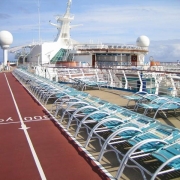

 Seatrade Global Cruise Conference. The topic of the panel was “Cruise Connectivity: Planning Today for the Ships of Tomorrow.” The agenda focused on the continuous and rapid development of technology and communications in the cruise industry. There was a robust list of panelist to contribute to the discussion which included Tennyson LaJeunesse, CEO of RedCell Technologies, Gregory Martin – O3B – VP, Mobility Market Segment Management, Rez Rasoulian – Carnival Cruise Line – VP, Global Guest Connectivity and Joe Spytek – ITC Global – CEO
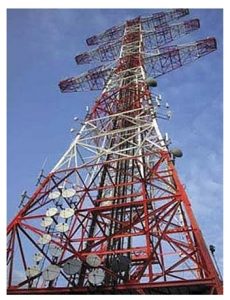 With the rise of Spotify and online radio, many people may think that the FM radio will die out soon. How true is this claim? Well, it is right to an extent. Do you remember a time when the only source of radio was your FM receiver in your car or your big clunky stereo system in your living room? Today, a lot of people prefer to use their phones to listen to radio online. Is the future of FM radio in jeopardy? Maybe well into the future, but it seems to currently have a tenacious hold on our hearts and minds.
 FM radio was born in 1928 out of research and development as a way to successfully improve AM radio by eliminating static. With an entirely new approach to transmitting radio signals, the late Major Edwin Armstrong invented a method of producing high fidelity sound using Frequency Modulation “FM”. (One of several key inventions this little known inventor gave to our society namely, “Wireless Receiving System”, “Electric Wave Transmission”, “Antenna with Distributed Positive Resistance”, “Method of Receiving High Frequency Oscillation”, “Selectively Opposing Impedance to Received Electrical Oscillations”, “Signaling System”, “Wireless Receiving System for Continuous Wave”, “Radio Signaling System”) Unfortunately this superior technology was not embraced by the communication industry largely because of corporate greed. Many established broadcasters felt FM was a threat and did what they could to dismiss or delay its public acceptance. Mr. Armstrong was forced to use his own money to build the first commercial FM Radio station, W2XMN and later KE2XCC, in 1937 in Alpine, NJ.